The Movement a German Shorthaired Pointer Should Show
It's incredibly frustrating when you watch a German Shorthaired Pointer move, knowing they are built for grace and power, yet something just doesn't look quite right. Maybe it's a puppy whose gait seems a little off, or an older dog showing stiffness you can't quite pinpoint. This guide is here to walk you through what the ideal movement of a German Shorthaired Pointer should look like, why it's so important, and how to understand and maintain that athletic prowess throughout their lives, helping you recognize both excellence and potential issues.
Understanding the GSP's Purposeful Gait
When you talk about a German Shorthaired Pointer's movement, you're really talking about the very essence of the breed. These dogs weren't just bred to look pretty; they were engineered for purpose, for long days in the field, covering ground efficiently and tirelessly. Their gait is a direct reflection of that history, a blend of power, agility, and endurance, all wrapped up in one magnificent package. It's not just about how fast they can run, but how well they can do it, hour after hour.
The Hunter's Efficiency in Motion
Imagine a hunter walking miles through diverse terrain, from open fields to dense cover, all while searching for birds. Their dog needs to match that effort, perhaps even exceed it, without burning out too quickly. This is where the GSP's movement truly shines. Their ideal gait is designed for maximum efficiency, allowing them to conserve energy while still covering vast amounts of ground. Every stride is calculated, every muscle working in harmony to propel them forward with minimal wasted effort. It's like watching a finely tuned machine, where every part serves a critical function, making them a marvel to observe in their element.
This efficiency isn't just for show; it's a matter of survival and success in the field. A GSP that moves poorly will tire quickly, struggle to maintain pace, and ultimately, won't be as effective at finding and retrieving game. Think about how much ground a GSP covers during a typical hunting day – sometimes tens of miles. Without a naturally efficient gait, such an undertaking would be impossible without risking injury or exhaustion. It's a testament to the meticulous breeding that went into creating these versatile dogs, ensuring they could perform their duties day in and day out, season after season.
Bridging Field and Show Ring Expectations
It's fascinating how the demand for efficient field movement translates into the show ring. While one might think show dogs prioritize aesthetics over function, in the GSP world, the two are inextricably linked. A show judge isn't just looking for a pretty picture; they're looking for a dog whose conformation allows for that ideal, powerful, and efficient movement. The breed standard, which guides judges, describes a movement that is both agile and enduring, reflecting its working heritage. This means that a GSP that moves well in the show ring should, theoretically, also be capable of moving well in the field, even if their specific training differs.
Of course, there can be subtle differences in how a dog trained purely for the field might carry itself versus one primarily focused on the show ring. A field dog might show a more rugged, less "polished" presentation, but the underlying mechanics of their powerful stride should remain. The show ring demands a certain grace and precision, but it's built upon the foundation of functional anatomy. A GSP with excellent reach and drive, a level topline, and balanced angulation will excel in both arenas because these traits are fundamental to efficient movement, regardless of the setting. It's all about illustrating the breed's ability to do the job it was created for.
Why Soundness is Non-Negotiable
For any dog, but especially for an active breed like the German Shorthaired Pointer, soundness of movement is paramount. It refers to the structural integrity and health of their skeletal and muscular systems, allowing them to move without pain or impediment. When a GSP is unsound, it means there's a problem, whether it's genetic, an injury, or simply poor conditioning. This isn't just about winning ribbons or bagging birds; it's about the dog's quality of life. An unsound dog might experience chronic pain, be prone to further injuries, or simply lose the joy of running and exploring that is so central to their nature.
Consider conditions like Hip Dysplasia in a Hard Running German Shorthaired Pointer or issues with elbows; these can severely impact a dog's ability to move freely and comfortably. Breeders often conduct health screenings like OFA and PennHIP evaluations precisely to identify and minimize the passing on of these structural issues, understanding that good movement starts with good genes and healthy development. For owners, paying attention to soundness means recognizing when your dog's movement changes, whether it's a slight limp after a long day or a more persistent stiffness, and seeking veterinary attention promptly. It's our responsibility to ensure these incredible athletes can move comfortably for as long as possible.
The Ideal Stride: What to Look For
When a German Shorthaired Pointer moves, especially at a trot, it should be a symphony of coordinated effort. The goal isn't just speed, but a smooth, ground-covering, and balanced action that looks almost effortless. This "ideal stride" is what breeders strive for and what judges evaluate. It speaks volumes about the dog's overall conformation, muscle development, and inherent athleticism. It's not something you can fake; it's a fundamental expression of the breed's design.
The Balanced Trot: Power and Reach
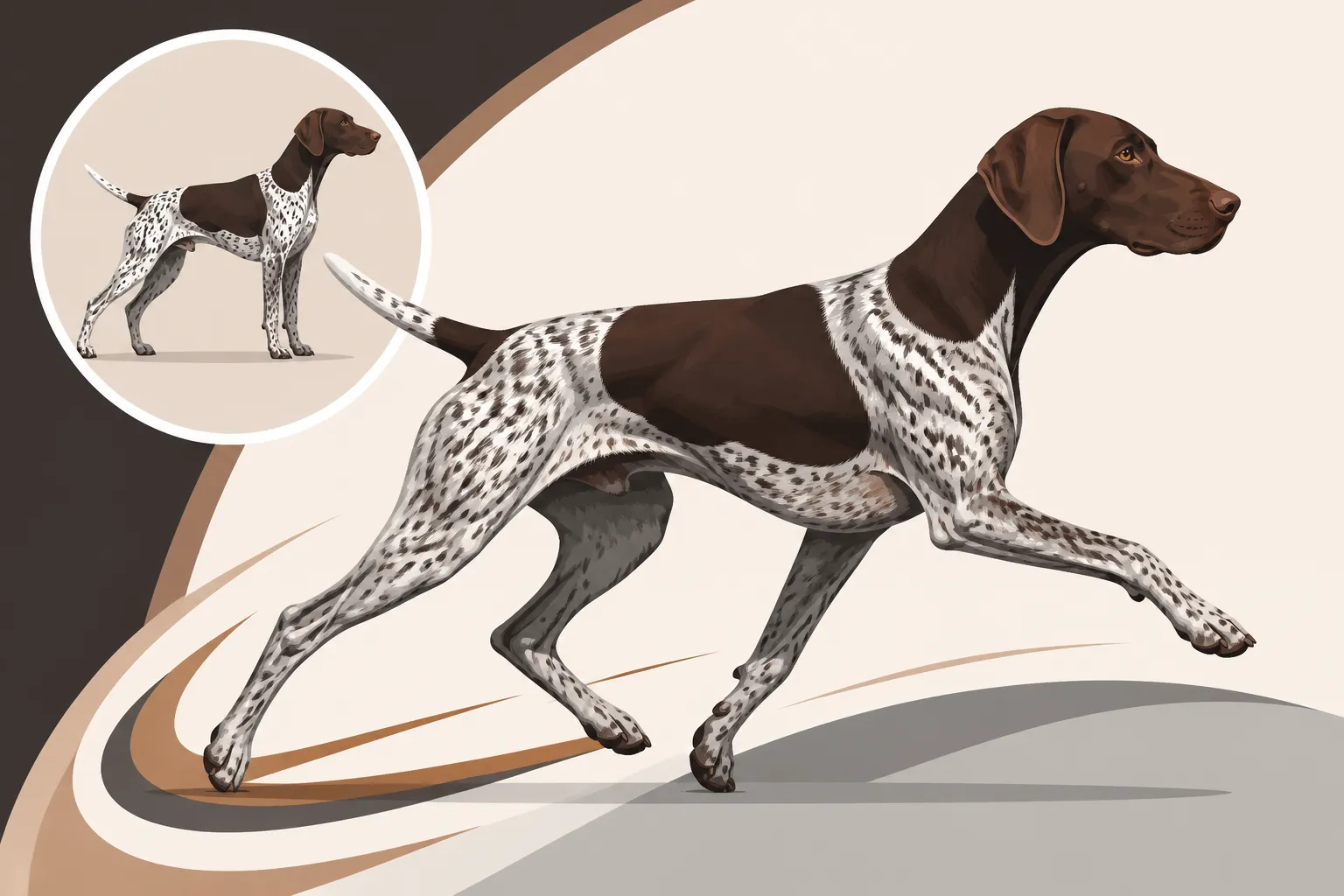
The trot is the gait most commonly evaluated, and for good reason: it’s a two-beat diagonal gait that clearly displays balance, coordination, and efficiency. In an ideal GSP trot, you should see excellent "reach" from the front legs and strong "drive" from the rear. Reach means the front leg extends forward freely, covering a good amount of ground without exaggerated lifting or high stepping. It's a flowing extension, allowing the dog to "reach" for the next step.
Concurrently, the rear legs provide powerful propulsion, driving the dog forward. This isn't just a push; it's an elastic, powerful extension from the hocks and stifles, pushing off the ground. When both reach and drive are balanced, the GSP moves with purpose, covering ground efficiently and smoothly. You want to see a level topline, meaning their back stays relatively flat and steady, rather than bouncing or rolling. An unbalanced trot, perhaps with short, choppy steps or a high head carriage, indicates inefficiency or discomfort.
Rear Drive and Front Extension
Let's dive a little deeper into the mechanics. The rear assembly is the engine of the German Shorthaired Pointer, providing the powerful drive that propels them forward. You want to see strong, well-angulated hindquarters that flex and extend fluidly. When the rear leg pushes off, it should extend fully behind the dog, creating that powerful thrust. Any choppiness or lack of extension in the rear can indicate weakness, discomfort, or poor angulation. This powerful drive is essential for everything from sprinting after a bird to jumping over obstacles in the field.
Complementing this, the front assembly acts as the steering and shock absorption system, responsible for extension and reach. The shoulder should be well laid back, allowing for a wide range of motion. As the front leg extends, the paw should land directly in line with the shoulder, smoothly, without any crabbing or sideways motion. The movement should be straight and true, from the shoulder to the paw. When both the powerful rear drive and the far-reaching front extension work together seamlessly, the GSP appears to glide over the ground, making even strenuous activity look easy.
Proper Foot Placement and Tracking
Another crucial aspect of ideal GSP movement is how their feet are placed relative to their body and to each other. At a fast trot, a properly built GSP will tend to "single track" or converge towards a center line. This means their paws, especially at speed, will come closer to the midline of their body, almost as if walking on a single invisible line. This single tracking is an energy-saving mechanism, improving efficiency and reducing side-to-side wobble. It’s a natural adaptation for an animal designed to cover ground over long distances.
If you observe a GSP from behind, their rear paws should track directly into the imprints left by their front paws. This indicates good balance and coordination. Any deviation, such as the rear legs swinging out (crabbing) or crossing over, suggests an imbalance or structural fault. For instance, a dog might be "cow-hocked," where the hocks turn inward, leading to an inefficient gait. Or they might "paddle," where their front paws swing out like oars. These deviations waste energy and can lead to increased stress on joints, which is why proper foot placement and tracking are critical indicators of sound movement.
Common Gaits and What They Mean
While the trot is the most commonly judged gait, GSPs, like all dogs, employ a range of gaits depending on their speed and activity. Understanding these different movements helps you appreciate their versatility and identify when something might be amiss. A German Shorthaired Pointer is a master of many speeds, from a casual walk to an all-out sprint, and each gait has its own characteristics.
The Ground-Covering Trot
We've talked a lot about the trot already, but it's worth reiterating its importance. For a GSP, the trot is their primary working gait in the field when they are systematically searching for birds. It's the gait of endurance, the one they can maintain for hours without tiring. When you see a GSP trotting purposefully, they should be covering a lot of ground with each stride, but without excessive effort. Their head should be held slightly forward, not overly high or low, allowing them to scent the air while maintaining balance.
A GSP's trot should be powerful, yet fluid. You won't see a lot of vertical bounce, but rather a horizontal flow. It should convey a sense of strength and purpose. Dogs that "hackney" (high-stepping front legs) or "mince" (short, quick, choppy steps) are wasting energy and are not demonstrating the desired ground-covering efficiency. This gait is a cornerstone of their utility, enabling them to quarter a field effectively, searching for scent without fatiguing prematurely.
The Effortless Canter and Gallop
Beyond the trot, the German Shorthaired Pointer is also capable of powerful canters and full-out gallops. The canter is a three-beat gait, often used when they need to pick up speed quickly or navigate slightly more challenging terrain. It's a rhythmic, somewhat rocking motion, still efficient but indicating a higher level of exertion than the trot. You'll see a GSP move into a canter when they're closing in on a scent, needing to cover ground quickly but still maintaining control.
The gallop, on the other hand, is the GSP's top speed. It's a four-beat gait, where all four feet are off the ground at certain points, allowing for explosive bursts of speed. This is what you see when they're chasing a flushed bird or running flat out in an open field. While less about efficiency over long distances and more about raw power and speed, a good gallop should still appear coordinated and balanced, not wild or uncontrolled. A GSP in a full gallop is truly a sight to behold, showcasing the incredible athletic prowess that makes them such effective hunting partners.
Recognizing Inefficient Movement
It’s just as important to recognize what isn’t ideal movement. These are the subtle clues that something might be off, either structurally or physically. For example, "crabbing" or "sidewinding" is when a dog moves with its body at an angle to its direction of travel, often to compensate for something like a tight hip or an unbalanced gait. "Paddling" (front feet swing out) or "winging" (front feet swing in) are also common deviations from straight, true movement.
Other signs of inefficient movement include a short, choppy stride, a reluctance to extend limbs fully, or a bouncy, unlevel topline. Sometimes, an experienced eye can detect "lameness" or a "shifty gait," where the dog subtly shifts weight to avoid discomfort in one leg. Owners often notice this first as a general reluctance to engage in their usual activities. If your dog suddenly seems less eager for a long run, or appears stiff after resting, it’s a big red flag that needs attention. Don't just dismiss it as "getting old" without ruling out treatable conditions. Early detection of issues impacting movement can make a huge difference in managing conditions like Arthritis in a German Shorthaired Pointer at Eight or recovering from injury.
Factors Affecting Movement
A GSP's movement isn't static; it's a dynamic expression influenced by a multitude of factors, from their inherited genes to the ground they're running on. Understanding these variables helps owners appreciate the complexity of canine locomotion and take proactive steps to support their dog's mobility.
Conformation and Genetics
At the core of a German Shorthaired Pointer's movement lies its conformation—the physical structure of its body. This is largely determined by genetics. Ideal conformation includes correct angulation of the shoulder and hip joints, a strong, level topline, well-sprung ribs, and sturdy bone. These structural elements work together to allow for that powerful reach and drive we've discussed. A dog with too straight a shoulder, for example, will have limited front reach and a shorter stride, making its movement less efficient. Similarly, overly steep hindquarter angulation can reduce drive.
Breeders spend generations selecting for dogs with excellent conformation, not just for looks, but for the functional soundness it provides. Health clearances, such as The Five Tests Behind a German Shorthaired Pointer CHIC Number, are vital tools to help identify genetic predispositions to conditions like hip and elbow dysplasia that directly impact movement. Even with the best breeding, genetics aren't a guarantee, but they provide the strongest possible foundation for a lifetime of healthy movement. It's why doing your homework on a puppy's pedigree is so important.
Age, Fitness, and Training
While genetics lay the groundwork, age, fitness, and training heavily influence how a GSP actually moves throughout its life. A young puppy might move a bit awkwardly as it learns to coordinate its rapidly growing body. An adolescent GSP, full of boundless energy, might move with youthful exuberance, sometimes a little clumsily. As they mature, their muscles develop, and their gait refines into that powerful, fluid stride. But just like human athletes, a GSP's fitness level is crucial. An out-of-shape dog, even one with perfect conformation, will move less efficiently, tire more quickly, and be more prone to injury. Regular, appropriate exercise, like Roading a German Shorthaired Pointer for Fitness, is key to building and maintaining the muscle tone and stamina needed for optimal movement.
As GSPs enter their senior years, changes in movement are inevitable. Joints may stiffen, muscles might lose some mass, and overall stamina can decrease. Recognizing The Age a German Shorthaired Pointer Slows in the Field is important, as is adjusting their activity levels and providing appropriate support. Furthermore, specific training for hunting or competitive events can enhance a GSP's movement, teaching them to conserve energy, navigate obstacles, and respond efficiently to commands. A well-trained GSP learns to optimize its natural gait for the task at hand.
Environmental Challenges and Terrain
The environment in which a German Shorthaired Pointer moves significantly impacts its gait and overall performance. Running on soft grass is very different from navigating rocky terrain or dense brush. Uneven surfaces, slippery mud, icy paths, or deep snow all require adjustments in stride, balance, and effort. Think of a GSP tracking a bird through a stubble field versus swimming through an icy marsh—each demands a different kind of physical exertion and adaptation in movement. Foxtails and Grass Awns in a Hunting Shorthair can also cause discomfort, leading to subtle changes in gait as the dog tries to protect an irritated paw or nose.
Weather conditions also play a huge role. Running in extreme heat can lead to early fatigue and potentially heatstroke, affecting coordination. Cold weather can stiffen joints and muscles, especially in older dogs. Owners must be mindful of these challenges and prepare their dogs accordingly, perhaps with protective gear like boots for rough terrain or limiting activity in harsh conditions. Providing Joint Supplements for a Hunting German Shorthaired Pointer can also help support their mobility against the wear and tear of varied environments.
Assessing Movement in a GSP
For German Shorthaired Pointer owners, especially those active in hunting or dog sports, understanding how to assess their dog's movement is a practical skill. It allows you to monitor their health, gauge their fitness, and appreciate the finely tuned athleticism of the breed. It’s also crucial for identifying potential problems early, before they become more serious.
What to Observe When Your Dog Moves Naturally
The best way to observe your GSP's natural movement is when they're simply being a dog – running and playing in an open, safe space. Look for fluidity, balance, and enthusiasm. Does your dog move freely, with a long, reaching stride, or do they appear stiff or hesitant? Pay attention to their energy levels before and after exercise. Do they bounce back quickly, or do they seem unusually tired or sore?
Watch them from different angles: from the side to see reach, drive, and topline; from the front and back to assess foot placement and tracking. Are their paws landing squarely, or do they turn in or out? Does their back remain level, or does it dip or arch excessively? Also, listen. Are there any unusual sounds, like clicking joints? Does their tail carriage seem natural and confident? Keep a mental log of their "normal" so you can quickly spot any deviations. Even subtle changes in gait, like a slight head bob or a reluctance to put weight on a particular leg, can be early indicators of a problem.
Formal Evaluation: Show Rings and Health Clearances
For breeders and those involved in competitive events, formal evaluations of movement are a regular occurrence. In the show ring, judges carefully watch a GSP trot around the ring, often in a triangle pattern, to assess every aspect of their gait. They are looking for adherence to the breed standard, which describes the ideal, efficient, and powerful movement. This includes reach, drive, foot placement, and the overall impression of balance and soundness. They're assessing whether the dog's conformation translates into the desired functional movement.
Beyond the show ring, health clearances play an indirect but crucial role in evaluating future movement potential. OFA (Orthopedic Foundation for Animals) and PennHIP evaluations for hips and elbows provide objective assessments of joint health, minimizing the risk of inherited conditions that could compromise a GSP's movement. While these aren't direct observations of gait, they confirm the structural integrity needed to support sound movement throughout life. A clear set of Elbow Scores on a German Shorthaired Pointer offers peace of mind to potential owners.
Spotting Subtle Changes in Gait at Home
This is where the owner's keen eye becomes invaluable. You spend the most time with your GSP, so you're best positioned to notice subtle shifts that a vet might miss in a brief examination. Perhaps your GSP is typically the first one to spring out of bed, but lately, they've been lingering, or seem a little stiff on their first steps. Maybe they're skipping occasionally on one leg during play, or shifting their weight when standing.
Observe them closely after a long day in the field. Are they favoring a paw that looks perfectly fine? Are they hesitant to jump into the truck or climb stairs? Sometimes, dogs with discomfort will compensate by shifting their posture or changing how they carry their head or tail. It's like they're trying to hide the pain. Look for changes in their enthusiasm for activities they once loved. If your normally tireless companion is suddenly A German Shorthaired Pointer That Has Stopped Wanting to Run, it's a sign that something is likely bothering them. Don't hesitate to consult your veterinarian, even for what seems like a minor change, as early intervention can often lead to better outcomes.
Maintaining Optimal Movement for Life
A German Shorthaired Pointer's athletic ability is a gift, but it's one that requires diligent care and management to preserve. From puppyhood through their golden years, supporting their skeletal and muscular systems is key to ensuring they can move freely, comfortably, and efficiently. It’s about being proactive, not just reactive, to the challenges of an active life.
Nutrition and Weight Management for Joint Health
The foundation of good movement starts with proper nutrition. A well-balanced diet provides all the necessary building blocks for healthy bones, muscles, ligaments, and tendons. For an active breed like the GSP, especially those working in the field, a high-quality performance kibble, often rich in protein and healthy fats, is crucial. But it's not just about what they eat, but how much. Maintaining The Body Condition a Field Shorthair Should Carry is paramount. Every extra pound of weight puts undue stress on their joints, accelerating wear and tear and increasing the risk of conditions like arthritis or Torn Cruciates in a Field Bred German Shorthaired Pointer.
Regularly assess your dog's body condition. You should be able to easily feel their ribs, but not see them prominently. There should be a distinct waist when viewed from above, and an abdominal tuck from the side. If your GSP is carrying too much weight, work with your vet to create a safe and effective weight loss plan. Sometimes, adding joint supplements like glucosamine and chondroitin, or omega-3 fatty acids, can also be beneficial, particularly as they age or if they have a history of joint stress. You can find a wide variety of these supplements on reputable pet supply sites like Chewy, offering different formulations to suit individual needs.
Conditioning and Exercise Regimens
Consistent, appropriate exercise is non-negotiable for a GSP's optimal movement. These dogs were bred to run, point, and retrieve all day, and their bodies thrive on activity. Lack of exercise leads to weak muscles, stiff joints, and a decline in overall fitness, which directly impacts their gait and agility. However, the type of exercise matters. For puppies, it’s about controlled play and avoiding excessive forced exercise that could damage growing joints. For adult dogs, a varied regimen including running, swimming, and mental stimulation helps build and maintain strong muscles and cardiovascular health.
Think about Conditioning a Shorthair Before Opening Day – this isn't just about endurance, but ensuring their muscles, ligaments, and tendons are strong and flexible enough to handle the demands of the field. This might involve gradually increasing roadwork, swimming, or long hikes. Remember to always warm up your dog before intense activity and cool them down afterward to prevent injuries and promote recovery. Even simple stretches can make a difference in maintaining flexibility. Over-exercising or starting intense training too quickly can be just as detrimental as under-exercising, so finding that balanced approach is key.
Proactive Veterinary Care and Support
Regular veterinary check-ups are essential for monitoring your German Shorthaired Pointer's overall health, including their musculoskeletal system. Your vet can perform lameness exams, palpate joints, and assess their gait to catch subtle issues before they escalate. Don't wait until your dog is overtly limping; discuss any stiffness, reluctance to move, or changes in behavior during routine visits.
As your GSP ages, these check-ups become even more crucial. Your vet can advise on age-appropriate exercise, diet modifications, and potential pain management strategies for conditions like arthritis. They might suggest physical therapy, anti-inflammatory medications, or other interventions to help Helping a Stiff Old German Shorthaired Pointer Get Up more comfortably. Early diagnosis and proactive management of musculoskeletal issues can significantly improve your GSP's quality of life and prolong their active years. Tools and aids like orthopedic beds or ramps can also help support their mobility at home, making everyday life easier. For specialized care or prescription diets for joint health, online retailers like Chewy often provide convenient delivery options, making it easier to manage ongoing health needs.
Disclaimer
This article is for general informational purposes only and does not constitute professional advice. Laws, prices and regulations vary by location and change over time. Consult a qualified professional for guidance on your specific situation.