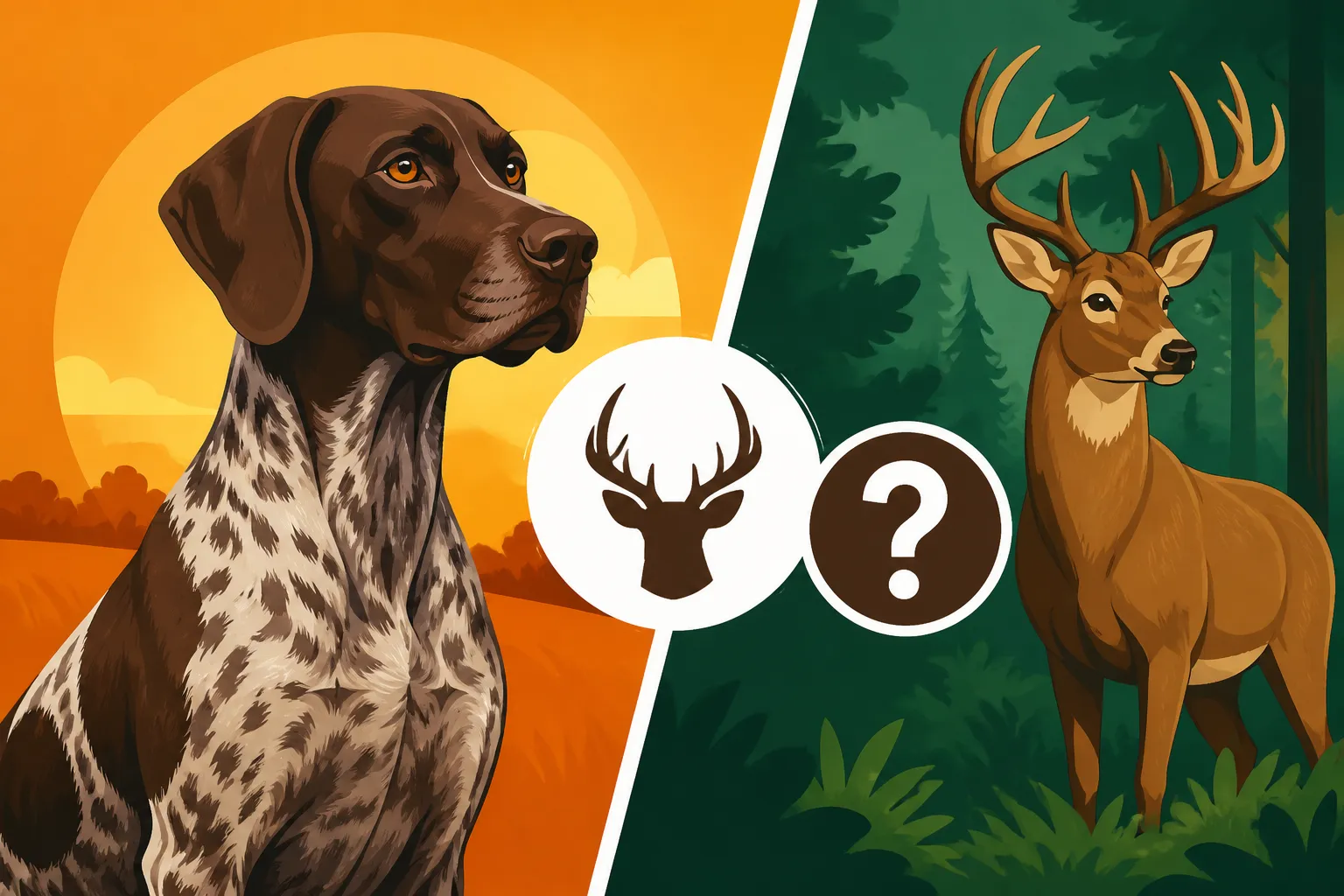
Whether a German Shorthaired Pointer Was Used on Deer
Many German Shorthaired Pointer owners, especially those new to the breed, often wonder about their dog's historical roles beyond birds. You see your athletic GSP with that incredible nose and think, "Could they have been used for something bigger, like deer?" It's a fantastic question, tapping into the very essence of their versatile nature, and it brings up a lot of misconceptions about how these dogs were, and still are, employed in the field. This guide will dive deep into the origins of the GSP and clarify their traditional and modern involvement with deer.
The German Shorthaired Pointer's Original Blueprint: Versatility Beyond Birds
When you look at a German Shorthaired Pointer today, with their lean physique, intelligent eyes, and boundless energy, it's easy to imagine them tackling all sorts of game. And in many ways, you'd be right! However, their history paints a very specific picture of the kind of "versatility" their original breeders had in mind. Understanding this origin is key to knowing their historical relationship with deer.
Bred for the European Hunter's Demands
The German Shorthaired Pointer didn't just appear overnight; they were meticulously crafted by German breeders over centuries to be the ultimate all-around gun dog. Unlike some other pointing breeds developed primarily for upland birds, the GSP was intended to work a wide variety of terrain and game. Farmers and hunters in Germany often couldn't afford a kennel full of specialized dogs – one for pointing, one for retrieving, one for tracking furred game, and another for vermin. They needed one dog to do it all. You can learn more about their beginnings in The German Kennels the Shorthair Was Built In.
This meant breeding for a dog that could point birds in the field, retrieve shot game (both feathered and furred), track wounded animals, and even dispatch smaller predators like fox. Their short, dense coat was a practical choice, offering protection from brambles and cold water without collecting burrs like a wirehaired breed. The vision was a robust, intelligent, biddable, and adaptable canine partner.
The game they were primarily concerned with included pheasants, partridge, quail, and ducks, but also rabbits and hares. When considering larger game like deer, it's important to remember the hunting traditions and ethical standards of the time and place. Actively running down or baying live deer was often the domain of specific hound breeds, not pointers, whose job was to locate and point game for the hunter to shoot.
Defining "Versatile" in the GSP Context
The term "versatile" in the context of the German Shorthaired Pointer is often misunderstood by new owners. It doesn't mean they excel at every hunting discipline equally, but rather that they possess a broad set of skills that make them competent across many. A truly versatile GSP can point, retrieve on land and from water, and track. This incredible suite of abilities is what has made them so popular worldwide. For a deeper dive, read What Versatile Actually Means for a Shorthair.
This versatility, however, traditionally centered on smaller game. While their strong scenting ability and tracking drive were certainly valuable, they weren't typically used to chase down healthy deer in the manner of a deer hound. The emphasis was on finding and recovering game that was already shot or injured, minimizing loss and ensuring ethical hunting practices. Think of it as a comprehensive toolkit for the hunter, rather than a single-purpose specialized instrument for big game.
The breeders specifically desired a dog that could handle both feather and fur. This means a good GSP should have a high prey drive but also be biddable enough to respond to commands even when game is present. They needed a powerful nose to follow scent trails through varied cover, whether it was the faint wisp of a pheasant or the stronger trail of a rabbit.
GSP Natural Abilities: Deer Sense or Bird Sense?
German Shorthaired Pointers are, without a doubt, canine athletes with incredible natural instincts. But how do these instincts align with the specific challenges of deer? Do they have a "deer sense" that matches their renowned "bird sense"? Let's break down their inherent capabilities.
Unpacking the Scenting Prowess and Tracking Instincts
There's no denying that the German Shorthaired Pointer possesses an extraordinary nose. They were bred for it, pure and simple. This keen sense of smell is what allows them to locate upland birds hidden in dense cover or track a pheasant that's been running ahead. This talent is also invaluable when it comes to tracking wounded game. Their olfactory capabilities are a direct result of their breed development, incorporating some of the best scent hounds into their lineage. More on this can be found in The Hound Blood Behind a Shorthair's Nose.
This natural ability translates well to following a blood trail from a wounded deer. They have the stamina to cover significant ground and the focus to stick to a scent line, even if it's faint or old. Imagine your GSP in a park, nose to the ground, meticulously following the path of a squirrel – that same intense focus can be directed to a deer's trail. This is why many modern GSPs are successfully used for deer recovery.
However, distinguishing between tracking a wounded animal and actively hunting a healthy one is crucial. A wounded deer leaves a clear, specific scent trail – blood, disturbed vegetation, often a unique stress scent. A healthy deer, while certainly emitting scent, doesn't present the same kind of track for a pointing dog to follow with the intention of cornering it. Their genetic programming leans more towards locating and indicating, rather than sustained, aggressive pursuit of large, fast-moving prey.
The Drive for Game: Big vs. Small
German Shorthaired Pointers have a strong game drive, a testament to their purpose. They are naturally inclined to pursue, point, and retrieve. This drive is typically directed towards birds, rabbits, and other small game. The energy and enthusiasm they bring to a bird hunt are legendary. From the moment they hit the field, their entire being is focused on finding game. You might be interested in Whether the Shorthair Was Bred for Fur as Well as Feather to understand the breadth of their original game targets.
While they possess the physical prowess and determination to chase larger animals, their inherent "programming" for big game is different from breeds specifically developed for deer hunting, such as certain hounds. A GSP's instinct is to point and hold, or retrieve quickly, not to engage in a prolonged chase or baying. If your GSP has ever been around a flock of backyard chickens, you’ll understand the intensity of their prey drive, as discussed in A German Shorthaired Pointer Around Backyard Chickens. It's powerful, but it's typically a 'find and point' or 'find and retrieve' mechanism.
Their strength lies in their ability to locate hidden game and bring it to the attention of the hunter. This skill is invaluable when dealing with a downed or wounded animal that needs to be found quickly and humanely. They are more precision tools for recovery than blunt instruments for pursuit of healthy, large game. This dual capability of pointing and tracking illustrates Pointing, Retrieving and Tracking in One Shorthair.
Modern Day German Shorthaired Pointers and Deer: A Crucial Distinction
So, while the historical role of the German Shorthaired Pointer wasn't primarily to hunt healthy deer in the traditional sense, their natural abilities have certainly found a valuable niche in modern deer hunting practices. The key is understanding the distinction between actively hunting and game recovery.
The Role of Tracking Wounded Deer
This is where the GSP truly shines in the deer woods today. A significant number of German Shorthaired Pointers are employed, often by their hunting owners, to track wounded or deceased deer that have been shot but not immediately recovered. There's nothing more frustrating, or heartbreaking, than a lost deer. This is where a well-trained GSP becomes an invaluable asset. Their exceptional nose, coupled with their stamina and determination, makes them perfectly suited for this demanding task.
A GSP tracking a wounded deer will follow the subtle scent of blood, disturbed earth, and even the unique pheromones of an injured animal, often over long distances and through challenging terrain. They're not chasing a live deer; they are systematically following a specific trail to a static or slow-moving target. This is a humane and ethical practice, reducing meat spoilage and preventing suffering. Many state regulations now permit or even encourage the use of tracking dogs for wounded game recovery.
Many owners who hunt birds with their GSPs will also train them for deer recovery, expanding their versatility. This usually means specific exposure to deer scent and practice on mock blood trails. A dedicated GSP working a blood trail is a sight to behold, a testament to their incredible olfactory prowess. Finding the right gear, like durable leashes and tracking harnesses, is crucial, and you can often find a good selection on platforms like Chewy to ensure your dog is comfortable and secure during these demanding tasks.
Specialized Training for Deer Recovery
While a GSP has the potential for deer recovery due to their strong nose and tracking drive, it's not an inherent, "point-and-hold" instinct for deer as it is for birds. This specific skill requires dedicated training that builds upon their natural abilities. The methods used for training a GSP for deer recovery differ significantly from traditional bird dog training. This distinction is vital for anyone considering this path. More information on how to build this skill can be found in Blood Tracking With a German Shorthaired Pointer.
Training typically involves exposing the dog to deer hides, fresh deer blood, and carefully laid out simulated blood trails. The handler teaches the dog to focus solely on that specific scent, ignoring other distractions like deer scent that isn't from the target animal. It's about precision and dedication to the track, rather than ranging widely to find a live animal. Unlike bird work where the dog might range out and eventually point, deer tracking is a slow, methodical process, often on a leash, with the dog focused intently on the ground.
Consistency and patience are key. The dog needs to learn that sticking to the blood trail, no matter how faint or old, leads to a reward – usually finding the "downed" deer (a hide or a piece of meat). This reinforces the desired behavior. It's a testament to the GSP's intelligence and biddability that many take to this specialized work with such enthusiasm. Investing in quality training treats and equipment from reputable retailers like Chewy can really help with the motivation and success of these training sessions.
Legal and Ethical Considerations for Tracking
Before attempting any form of deer tracking or recovery with your German Shorthaired Pointer, it is absolutely paramount to understand the specific laws and regulations in your state or region. These laws vary widely and can dictate everything from whether dogs are allowed to track deer at all, to specific requirements like being on a leash, notification protocols for game wardens, and even the type of equipment permitted. Ignoring these rules can lead to significant fines or legal trouble.
Beyond legality, there are strong ethical considerations. The primary purpose of using a GSP for deer is humane recovery. This is about minimizing suffering and ensuring that game is not wasted. A well-trained tracking dog reduces the chances of a deer suffering unnecessarily or being lost to the elements. It's a responsible aspect of hunting.
It's also crucial to remember that this is recovery work, not active hunting. The dog is following a wounded animal, not chasing a healthy one. This distinction is vital for maintaining good relationships with fellow hunters, landowners, and the general public, who might not understand the difference. Responsible dog handlers are ambassadors for both their breed and ethical hunting practices. The Nose the German Shorthaired Pointer Was Selected For explains why they are so effective at this specialized task.
Why "Deer Hunting" Isn't the GSP's Primary Game
While their role in deer recovery is invaluable, it's important to clarify why German Shorthaired Pointers are not typically considered primary deer hunters in the way some other breeds might be. Their fundamental instincts and training diverge from what's usually required for active big game pursuit.
The Pointing Instinct Versus Active Pursuit
The German Shorthaired Pointer is, first and foremost, a pointing dog. Their deeply ingrained instinct is to locate game by scent and then "point" or indicate its presence by freezing in a characteristic stance, often with one paw raised. This action allows the hunter to approach and flush the bird or small game. This is their core skill, honed over generations.
Actively hunting or chasing a healthy deer, however, requires a different set of instincts. It often involves a sustained chase, baying (barking to hold the animal at bay), or even bringing down the animal, depending on the specific hunting tradition and breed. This behavior is fundamentally at odds with the GSP's pointing instinct, which is about holding game, not driving it. If a GSP were to actively chase a deer, it would be breaking point and abandoning its primary function as a pointing dog.
When a GSP is trained for birds, they learn to honor a point, to be steady to wing and shot. This means not chasing the flush. Introducing them to actively chase large, fast-moving game like deer could fundamentally confuse their bird dog training and potentially ruin their reliability in the upland field. The two skill sets, while both relying on scent and prey drive, have very different behavioral outputs. This illustrates How the Shorthair Was Bred to Replace Four Specialist Dogs with different roles.
Divergent Training Paths: Bird Dog vs. Deer Hound
The training pathways for a dedicated bird dog and a dedicated deer hound are quite distinct. A GSP destined for the bird fields will spend countless hours on "whoa" training, steadying to flush, and intricate retrieving drills. They learn to work in partnership with the hunter, often ranging far but always checking in, covering ground efficiently to find birds.
A deer hound, by contrast, is trained to be single-minded in its pursuit of deer, often working independently to track, chase, and corner the animal. Their vocalizations, endurance for a long chase, and willingness to engage large game are paramount. Trying to blend these two intense training paths can be problematic for a GSP. A dog trained to chase deer might have difficulty maintaining a steady point on a pheasant, and vice versa.
While a GSP's intelligence and desire to please mean they can be trained for many tasks, asking them to be both a precise pointing bird dog and an active deer hunter often creates a conflict in their instincts and learned behaviors. It's a bit like asking a highly skilled surgeon to also perform heavy construction work – both require skill, but the tools and techniques are vastly different. For most GSP owners who hunt, focusing on their prowess as a versatile bird dog and a keen wounded game tracker offers the most harmonious and effective use of their incredible talents.
| Role/Trait | German Shorthaired Pointer (Primary Use) | Dedicated Deer Hound (e.g., Bloodhound, Cur) |
|---|---|---|
| Primary Game Focus | Upland birds, waterfowl, small furred game | Deer, bear, boar, raccoons |
| Core Hunting Skill | Pointing, retrieving, tracking wounded game | Trailing, baying, holding at bay |
| Behavior with Game | Pointing to indicate location, quick retrieve | Sustained chase, vocalizations (baying), cornering |
| Prey Drive Focus | Locate and hold, retrieve | Locate and pursue, hold |
| Stamina | Excellent for ranging fields and water retrieves | Excellent for long, persistent trails |
| Scenting Ability | Exceptional (air and ground scent) | Exceptional (primarily ground scent for trails) |
| Interaction w/ Live Deer (healthy) | Typically trained not to chase or point | Trained to pursue and hold |
| Use in Deer Hunting | Primarily wounded game recovery/tracking | Active hunting, driving, tracking healthy game |
Disclaimer
This article is for general informational purposes only and does not constitute professional advice. Laws, prices and regulations vary by location and change over time. Consult a qualified professional for guidance on your specific situation.